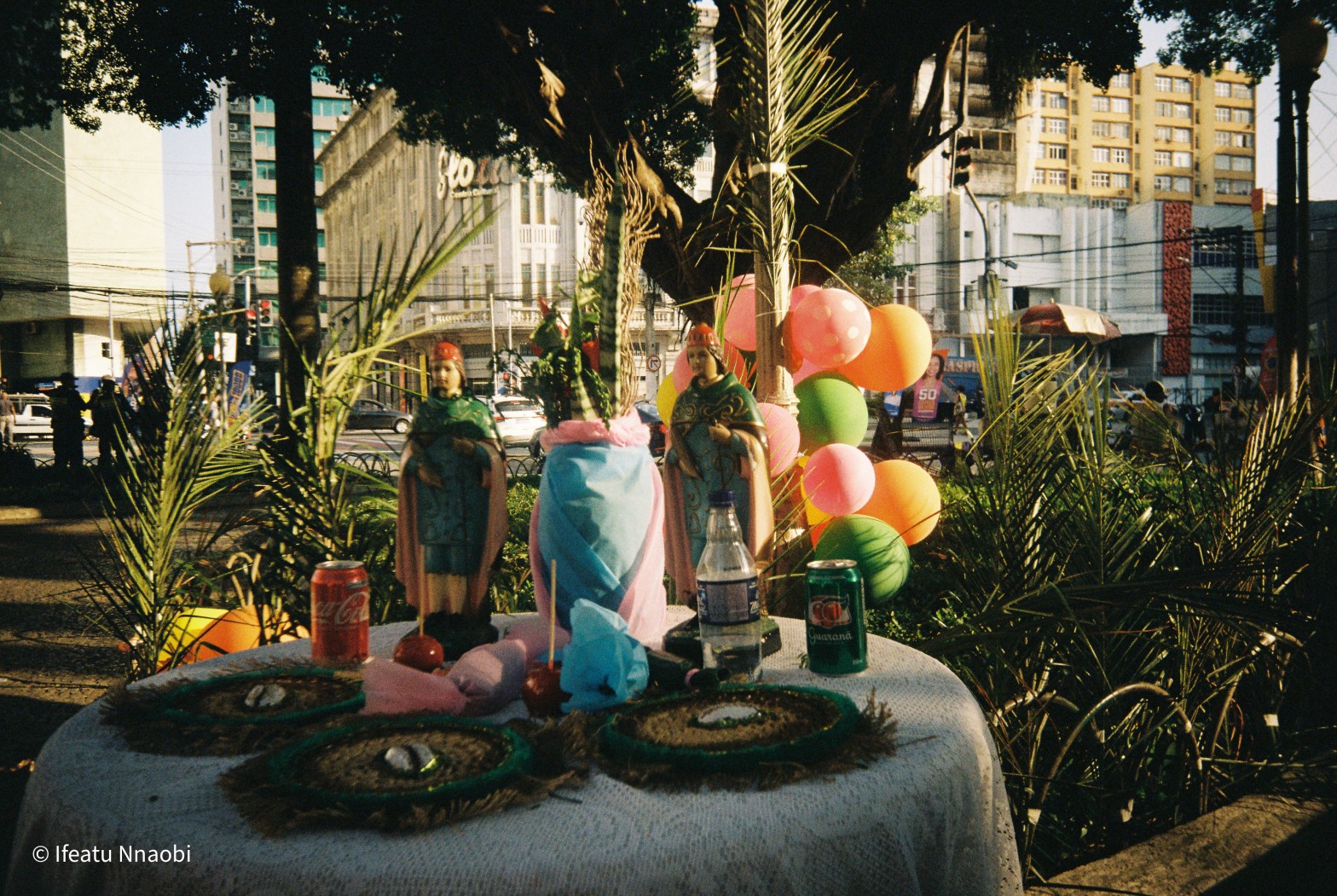
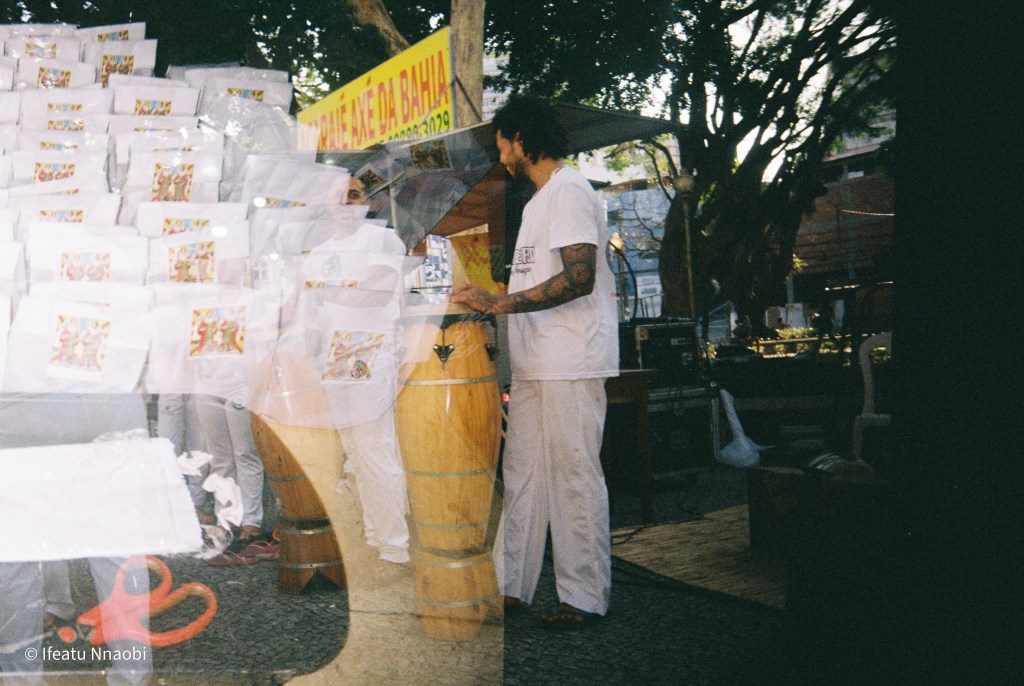
In September 2024, I attended two events to commemorate Festa de Cosme e Damião in Vitória, Espírito Santo. Cosme and Damião, also known as Saints Cosmas and Damian, are two saints from the Catholic tradition who have been syncretized into Umbanda and Candomble. Venerating Cosme and Damião takes place yearly around September 27th, and it was my first time attending. Whenever I visit Brazil, I am humbled by how the Afrodiasporic community, against all odds, preserved and continues to practice spirituality steeped in African traditional belief systems. I took some analogue pictures and made some videos to share. Cosme and Damião are syncretized with the Ibeji orisha.
During the festivities, it is customary to give out sweets and popcorn to kids and other celebrants. People also come together to play music, sing and dance.

Over the last few years, I have been fortunate to spend time in various parts of Brazil and I’m so fascinated by any spiritual practices with roots in African spirituality.
Growing up, I got to spend time with my family home in South East Nigeria and I remember it was common to see shrines in people’s home. My father’s village was renouned for being esteemed practitioners of Igbo spirituality. Unfortunately, the wave of pentecostalism that Nigeria experienced in the 90’s wiped out whatever esteem for culture that colonialism and neo-colonialism had not gotten to. So, I had to travel all the way to Brazil to experience practices similar to those I grew up with.
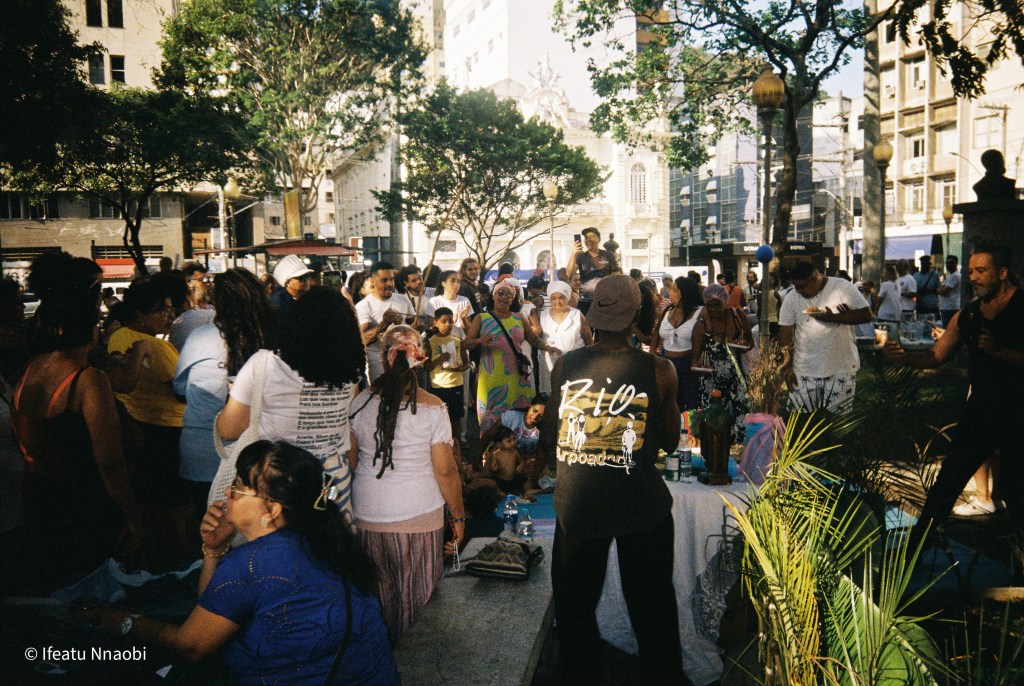
Although Festa de Cosme e Damião is connected to Orishas in the Yoruba pantheon, a complex and powerful group of deities, I felt proud and affirmed to witness public reverence for a belief system that I have proximity to. When some of the event organizers learned that I was from Nigeria, I was asked to say a few words in my basic Portuguese. Sidenote: this motivated me to take my Portuguese language learning more seriously.
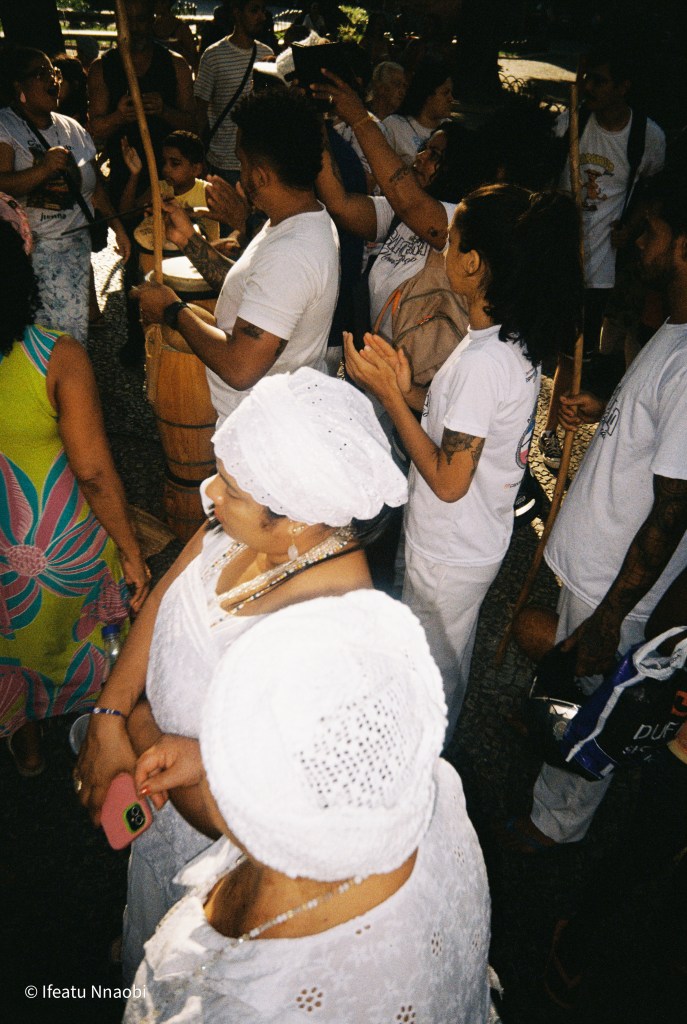
I also experienced this sort of awe at being “from the source” in Bahia where Umbanda and Candomble are common place, and a state in Brazil which has the highest concentration of Black people outside of the African continent. I matched their awe with my gratitude at being able to experience a practice similar to that which should be mine; but that I was robbed of. I cannot begin to imagine the sacrifices that went into preserving these practices. As altered and evolved as they might be today, they still hold so much of their original wisdoms.

One new year’s eve of 2022, a friend took me to a Samba in Salvador de Bahia (If you’ve never been to Salvador, I recommend it). Everyone was invited to play an instrument, sing or dance. Women and girls could pick up a skirt from the hanging line, put it on and join in with those twirling. At some point in the night, a woman started singing, she was telling the story of how enslaved people struggled to protect their ancestral knowledge. At that point, I knew even less Portuguese but my subsconscious just knew what she was talking about. I felt it inside me. My friend tried to translate the story to me to help me follow along but I told her that she didn’t need to because I understood what was going on. She asked me to tell her what was being said and to her surprise, I was correct. Maybe it was being around familiar melodies, sounds or the sheer vibrations that have been etched into my soul. Maybe it was something spiritual. Or simply a predisposition for understanding that which is mine.
In July 2019, while researching my documentary project Ancestral Wisdom, which was founded on the idea that indigenous wisdom holds solutions to most of the world’s current problems, I interviewed an Igbo spiritualist, Emenike Ikegbuna at his home in South East Nigeria. We spoke about the deification of land in Igbo spirituality, festivities in the Igbo lunar calendar, and the connections between spiritual practices and environmental degradation. Unfortunately, I have never been present at any of the festivities Ikegbuna mentions.
In the recent years, two events based on African spirituality, the Osun Osogbo festival in Nigeria, and the Ouidah festival in Benin have gained global popularity among Afro-diasporic folks. Not living in Nigeria makes it harder for me to plan a trip to these. Therefore being able to stumble upon things that are very much a part of me, while I am thousands of miles away from their origin was so much more special. Festa de Cosme e Damião in Vitória was such a gift to me.
 Ifeatu Nnaobi